Patients choose you before they meet you.
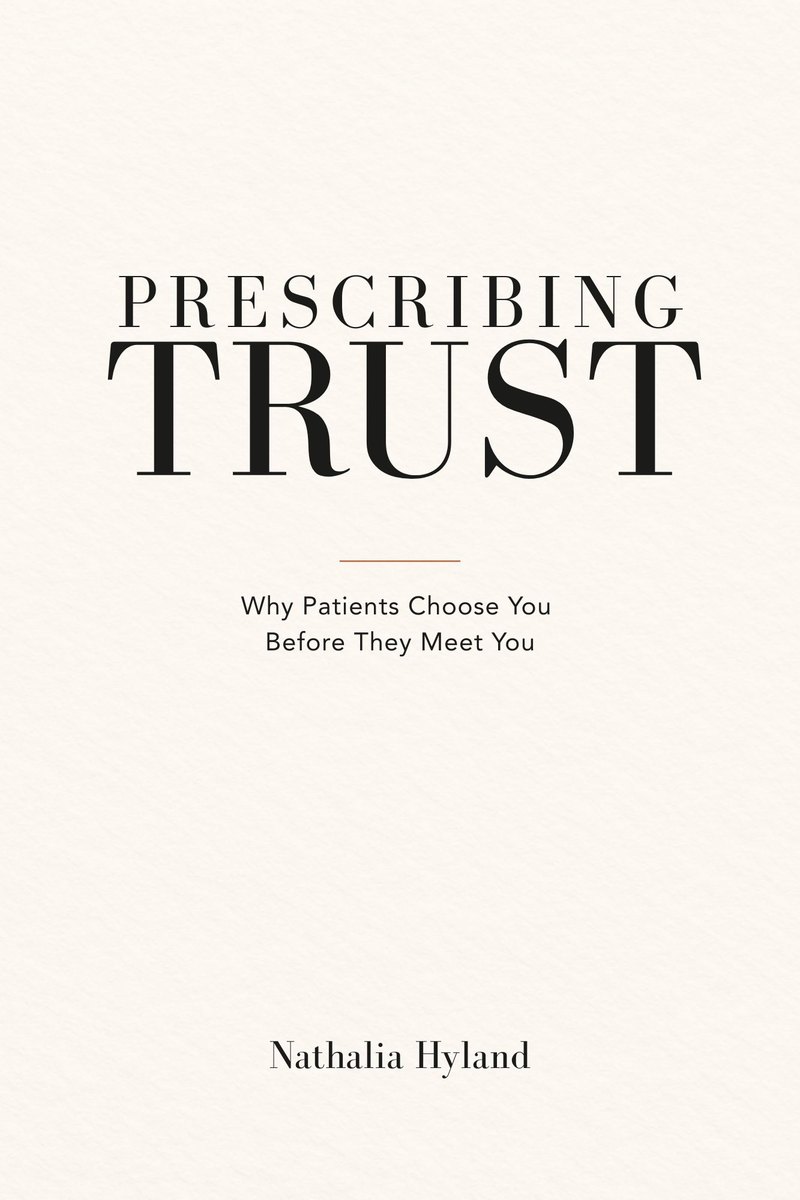
Prescribing Trust is about how patients decide whether care feels accessible and trustworthy, often before they ever meet the doctor, and about the handful of moments that follow once they do.
Fast impressions decide what a patient notices, which options feel safe enough to consider, and how they read the evidence that follows. The point of understanding that is not to manipulate it. It is to stop accidentally fighting it.
What it argues
Warmth is read before competence, and the order is fixed. Willis and Todorov found that a tenth of a second is enough for a stranger to judge trustworthiness from a face, and that longer looking does not change the verdict, only the confidence in it. Lindgaard's team found the same for web pages at fifty milliseconds. Fiske's work explains why people check intent before ability: a capable threat is worse than an incompetent one, so the brain looks for safety first.
Which means a page that opens with credentials is answering the second question first. It can read as capable and cold, and cold reads as unsafe. That is where skilled physicians lose patients they never knew were considering them.
None of this is a case for performing warmth you do not have. It is a case for clearing away the polished corporate language that hides the warmth already there.
Who it is for
Independent practices where patients choose you and pay you directly. Direct Primary Care, cash-pay specialty care, dentistry, therapy. The trust threshold is higher when someone is spending their own money on a relationship with a specific person rather than a network.
Most of the examples come from Direct Primary Care, because that is where I have had the closest and longest view. The examples are specific by design. The psychology is not.
What is in it
Nine chapters, running from the first fraction of a second through how strangers find you, what they scan, review replies, the first conversation, the window right after someone signs up, boundaries, referrals, and the ways trust leaks once you have it.
Then a ten-question scorecard for auditing your own practice, and an eighteen-exercise workbook: homepage audit and rewrite, photograph audit, search snippet audit, review response practice, meet-and-greet architecture, the first fourteen days, boundary design, and a ninety-day plan.
Where it came from
Clinical practice as a dentist, a master's in health communication, and several years leading marketing, strategy, and physician research for a national physician media platform, which gave me a front-row view of more than 300 independent physicians building practices of their own.
Alongside the published work: Willis and Todorov on first impressions, Lindgaard on web pages, Fiske on warmth and competence, Kahneman on fast and slow thinking, and a 2024 systematic review in the American Journal of Preventive Medicine pooling 29 studies across 16 countries and more than 32,000 patients on what drives the choice of a doctor.